Every recommendation here follows the Trail Gear Journal testing and evaluation process.
The Short Version
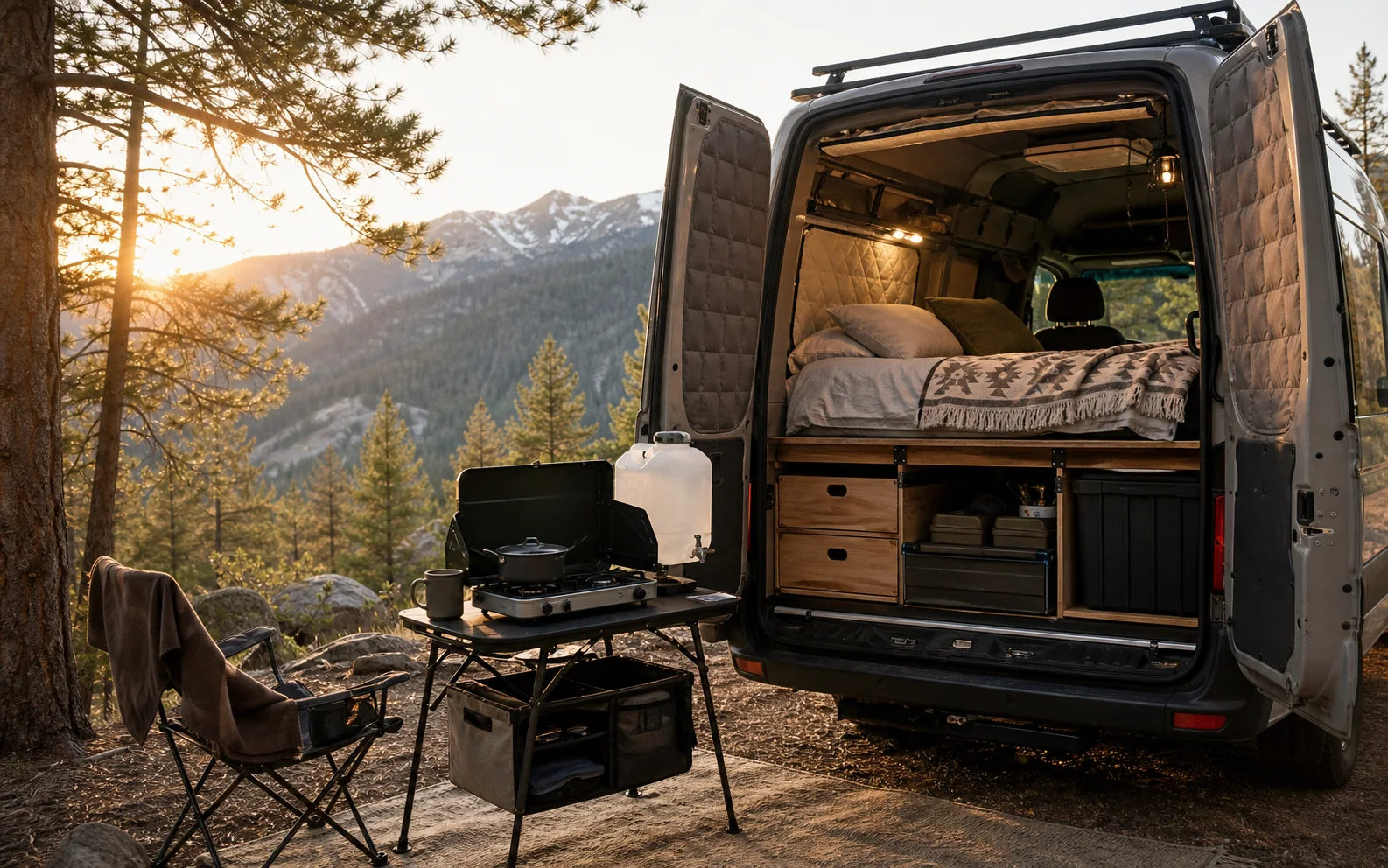
A beginner van life setup should solve sleep, storage, ventilation, water, cooking, power, and privacy in that order. Social media builds often start with cabinetry and mood lighting, but real comfort begins with a flat bed, dry bedding, enough airflow, and a way to find your socks without unpacking the entire vehicle. The best first build is modular because your first five trips will teach you more than any spreadsheet. Avoid permanent expensive decisions until you understand how you travel.
Sleep Platform
The bed defines the layout. A fixed platform is simple and gives storage underneath, but it consumes interior space. A convertible bench or folding platform gives daytime room but adds setup steps. For beginners, a simple platform with a real mattress or high-quality foam is often the least frustrating path. Make sure the sleeping surface is flat, ventilated underneath if possible, and sized for actual bodies rather than fantasy floor plans. Poor sleep turns a beautiful build into a vehicle you avoid.
Storage That Works
Van storage should be accessible from the position where you use the item. Kitchen gear near the rear hatch makes sense if you cook outside. Clothes should be reachable without moving the whole bed. Recovery gear and tools should not be buried under pillows. Clear bins, soft cubes, and drawer modules may look less custom than built-ins, but they let beginners revise the setup without demolition. Weight distribution also matters. Keep heavy items low and secured.
Power Strategy
Many beginners do not need a permanent electrical system on day one. A portable power station can run phones, cameras, small lights, and some fridges if sized properly. Solar helps, but shade, weather, and parking orientation reduce real output. Before buying, list watt-hours for the devices you truly use, then add margin. Avoid designing around imaginary appliances. If you later install permanent wiring, fusing, wire gauge, ventilation, and battery placement become serious safety topics.
Water and Cooking
A simple water setup can be two jugs: one clean, one gray. Add a small basin, biodegradable soap where appropriate, towels, and a place to dry dishes. For cooking, many beginners are better served by an outdoor camp stove than an indoor permanent galley. Cooking outside reduces condensation, smells, and ventilation complexity. If you cook inside any enclosed vehicle, carbon monoxide and fire safety become non-negotiable. Use equipment only as instructed.
Ventilation and Condensation
Ventilation is not glamorous, but it changes everything. Sleeping humans create moisture. Wet clothes, cooking, and cold glass make it worse. Cracked windows with bug screens, a roof fan, or window vents can help. In cold weather, manage condensation with airflow, insulated window covers, and dry storage for bedding. A van that cannot breathe will feel damp even when nothing is leaking.
Privacy and Security
Window covers provide privacy, temperature control, and better sleep. Use covers that fit well and store neatly. Keep valuables out of sight, park legally, and avoid making a campsite out of places where camping is not allowed. Beginners sometimes focus on stealth, but the better goal is respect: understand local rules, minimize impact, and avoid drawing attention through noise, mess, or illegal overnighting.
What to Skip at First
Skip expensive custom cabinetry, oversized batteries, complicated plumbing, and permanent appliances until you know your travel rhythm. Rent, borrow, or mock up systems before committing. A folding table may teach you where the kitchen belongs. A cooler may reveal whether you really need a fridge. A few trips in a simple setup will sharpen the build better than weeks of online research.
Bottom Line
A good beginner van setup is boring in the best way. It lets you sleep well, store gear cleanly, cook safely, manage water, charge essentials, and leave quickly. Build the first version to learn, not to impress. The premium setup is the one that removes friction from the trip.
Source Notes
- Electrical and propane installations can create fire, ventilation, and carbon monoxide risks; permanent systems should follow product instructions and qualified guidance.
- This guide favors modular choices because beginners often learn their real travel style after several trips.
FAQ
What should I build first in a beginner van setup?
Start with sleep, storage, and ventilation before buying luxury electrical gear. A comfortable safe sleep system determines whether the setup works.
Do I need a full electrical system?
Not at first. Many beginners can start with a portable power station, modest charging plan, and efficient devices before committing to permanent wiring.
Is a 12V fridge worth it?
For frequent trips, yes. For occasional weekend camping, a good cooler may be cheaper and simpler.