Every recommendation here follows the Trail Gear Journal testing and evaluation process.
The Short Version
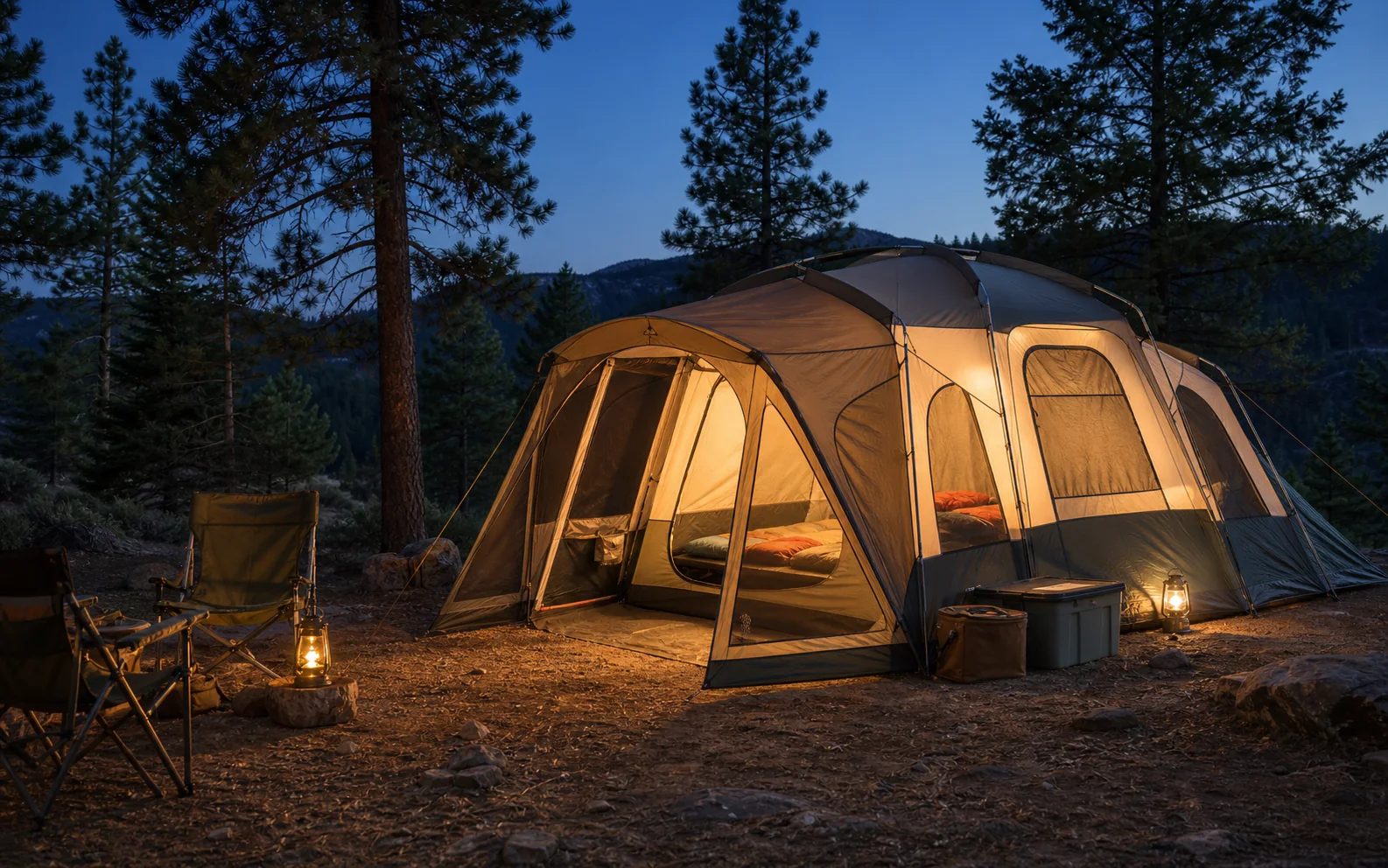
For most US campground families, the best tent is not the lightest or the tallest one on a spec sheet. It is the shelter that gives adults enough standing room to change clothes, enough door management for kids to enter without dragging half the campsite inside, and enough rainfly coverage that a normal summer storm does not become a midnight problem. Six-person tents are usually the sweet spot for families of three or four. Eight-person tents can be excellent for longer stays, but they take more ground space, more drying time, and more patience when wind arrives.
What Matters Most
Start with peak height, door layout, rainfly coverage, pole architecture, and vestibule space. Floor area matters, but published capacity numbers are optimistic because they assume people sleeping shoulder to shoulder with minimal gear. A family tent also needs a sane packed size. If the bag is awkward enough that it permanently lives in the garage corner, the tent will not get used. For 2026, the strongest family tent buys tend to be slightly heavier car-camping shelters from established outdoor brands, plus budget options from mass-market brands for fair-weather campers.
Best Overall Family Tent
The REI Co-op Base Camp 6 remains a strong benchmark because it balances storm-minded geometry with livable interior space. Dome-inspired tents like this tend to handle wind better than cabin tents, and a full-coverage fly is valuable when thunderstorms roll through established campgrounds. The tradeoff is that the walls are less vertical than a cabin tent, so the interior feels a little less apartment-like. For families who camp in the Rockies, the Pacific Northwest, the Great Lakes, or anywhere afternoon weather changes quickly, that tradeoff is usually worth it.
Best Premium Livability Pick
The NEMO Aurora Highrise 6P is the sort of tent people notice because it feels calmer inside. Tall sidewalls, big doors, and thoughtful storage make it appealing for parents who want the campsite to feel organized instead of chaotic. It is not a backpacking shelter, and it should be treated as a car-camping investment, but the comfort payoff is real. It works best for families who take several weekend trips each year and value interior mood as much as raw square footage.
Best Value Direction
Coleman family tents can be sensible when the use case is fair-weather camping, backyard sleepouts, music festivals, and state-park weekends where the forecast looks friendly. The value proposition is simple: more space for less money. The compromise is that budget tents often have less refined fabrics, shorter rainfly coverage, and less elegant pole systems. If you buy one, seam-check it before the first real trip, bring extra stakes, and avoid pretending that an inexpensive cabin tent is a mountain storm shelter.
How to Choose
Buy one capacity size larger than the number of people, unless everyone uses narrow pads and packs extremely light. Look for at least two large doors if the tent will hold more than four sleepers. Prioritize a vestibule or awning if you camp in wet areas. Consider whether you can pitch the tent with one adult while another handles kids, food, or a dog. That last point is underrated. The best family tent is often the one that reduces friction at 6:30 p.m. when people are hungry and the headlamps are still buried in a tote.
Field Setup Advice
Pitch the tent at home once before the first trip. Check the rainfly orientation, count stakes, label poles if the system is not obvious, and learn how tight the floor should be before clipping the canopy. At camp, place the door away from prevailing wind when possible, use all guy-out points in exposed sites, and keep sleeping bags away from tent walls. Condensation is not always a leak. Families create a lot of moisture overnight, especially in cool weather, so ventilation matters even when the fly is on.
Bottom Line
Families who camp often should buy for weather confidence and interior calm. Occasional campers can buy for value, but should still respect wind, rain, and setup practice. A good tent does not need to be flashy. It needs to go up predictably, stay dry in ordinary storms, and make the morning feel less like a gear explosion.
Source Notes
- Manufacturer pages and retailer spec sheets change frequently, so current floor dimensions, weights, and prices should be confirmed before purchase.
- For family tents, the recommendations emphasize livability and weather design over backpacking weight.
FAQ
What size tent should a family of four buy?
Most families of four are happier in a six-person tent because sleeping pads, duffels, shoes, and a dog or two quickly consume floor space.
Are instant tents worth it?
Instant tents can be useful for short campground stays, but they usually trade packed size and long-term pole serviceability for speed.
Should I buy a tent with a vestibule?
Yes if you camp in rain, dust, or shoulder-season weather. A vestibule gives wet shoes and camp chairs a place to live outside the sleeping area.