Every recommendation here follows the Trail Gear Journal testing and evaluation process.
The Short Version
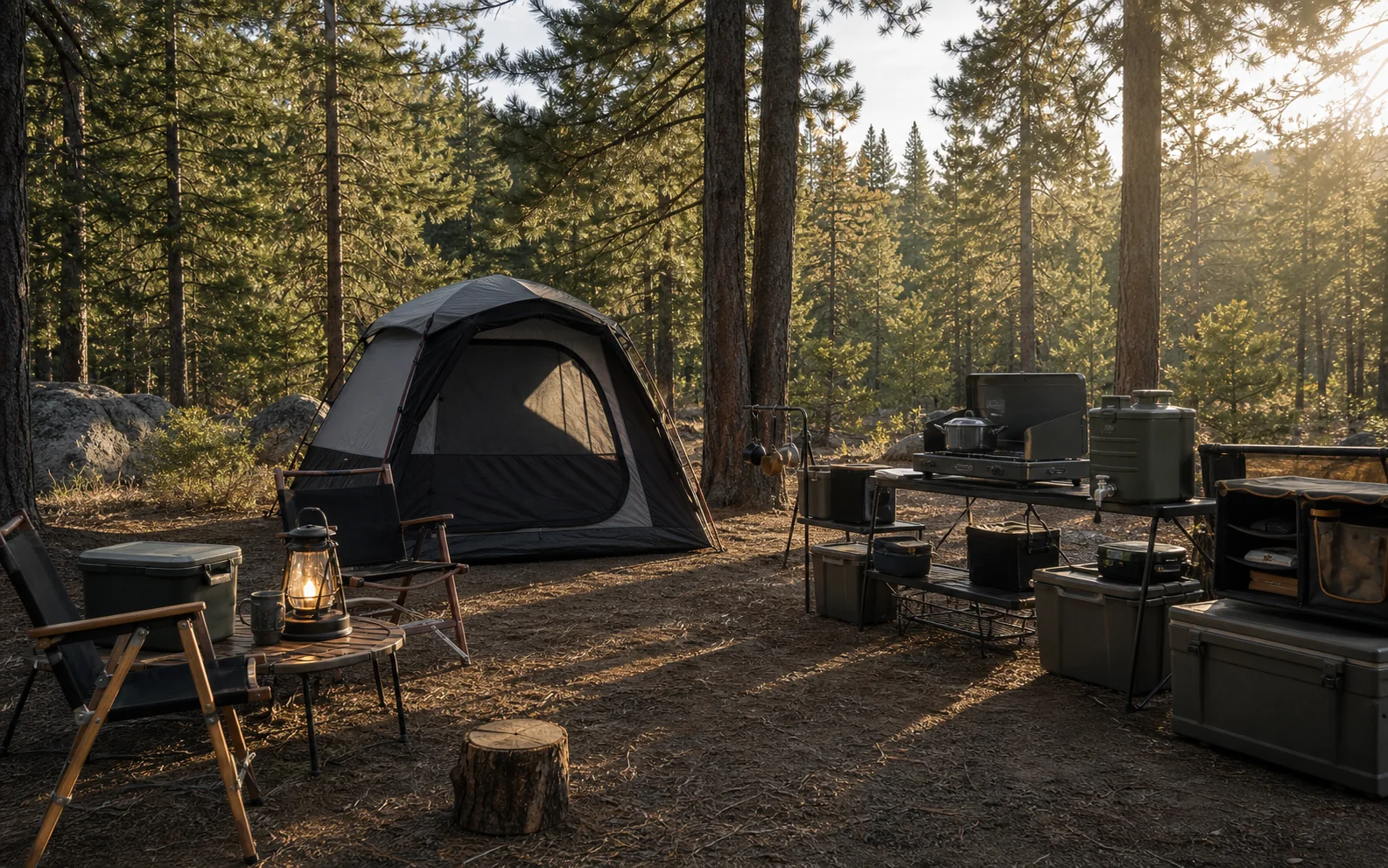
A good campsite setup is less about perfection and more about sequence. Shelter first, kitchen second, water and light immediately after, then comfort. Most forgotten-gear problems happen because people pack by object rather than by function. A pile of cool items does not guarantee a working camp. A zone-based system does. Think in terms of sleep, kitchen, water, lighting, weather, repair, safety, and personal care. If every zone has a container or checklist, camp becomes much easier to build after a long drive.
Arrive With Daylight
The single best campsite upgrade is arriving before dark. Daylight lets you read slope, drainage, widowmaker risk, wind direction, and distance to facilities. It also keeps small mistakes small. If you must arrive late, keep headlamps, tent stakes, a mallet, and one warm layer in an easy-access bag. Do not bury the first-hour gear under coolers and chairs. Camp setup is a choreography problem, and the first move should be obvious.
Choose the Tent Site
Look for a flat durable surface that will not collect water. Avoid low spots, dry creek beds, ant-heavy ground, and areas under dead limbs. Respect tent pads where provided. Orient the door so morning traffic and wind make sense. In hot weather, shade may matter. In cold shoulder seasons, morning sun can help dry condensation. Stake the tent fully if wind is possible. Many tents look stable with four corner stakes until a gust proves otherwise.
Build the Kitchen Zone
The kitchen should be convenient but separate from the sleeping area. Use a stable table for the stove, keep fuel upright and away from heat, and establish a clean side and a dirty side. Put a trash bag in place early. Set water where everyone can find it. In bear country or any campground with strict food rules, follow posted storage requirements exactly. Do not store snacks, scented toiletries, or trash in the tent. A clean kitchen is about wildlife safety, not just neatness.
Lighting and Night Flow
Place lanterns and headlamps before sunset. One ambient light near the kitchen, one small light near the tent entrance, and personal headlamps for everyone is a strong starting point. Avoid blasting bright light across neighboring campsites. Mark trip hazards like guy lines if people will move around after dark. A tidy night path from tent to bathroom is more valuable than a dramatic camp vibe.
Weather Readiness
Set up for the forecast you might get, not only the weather you have when you arrive. Keep rain jackets accessible, store dry layers in waterproof bags, and guy out shelters before wind arrives. If rain is possible, angle gear bins and chairs so water does not pool. Put shoes under a vestibule or protected edge. Small weather decisions made before dinner prevent damp, irritated mornings.
Packing by Zones
Sleep zone includes tent, stakes, poles, footprint, pads, bags, pillows, and sleep clothes. Kitchen zone includes stove, fuel, cookware, lighter backup, utensils, cutting surface, food, cooler, trash, towels, and soap. Water zone includes jugs, bottles, filter if needed, and a dish-rinse plan. Repair zone includes duct tape, cord, spare stakes, multi-tool, patch kit, batteries, and a small sewing kit. Safety zone includes first aid, medications, sun protection, insect strategy, navigation, and emergency contact plan.
Departure Setup
Good camp setup includes an easier pack-out. Keep storage bins assigned to the same zones. Dry tents before packing when weather allows. Separate trash from recyclables if the campground supports it. Do a hand sweep for stakes, bottle caps, food scraps, and small gear. Leave the site better than you found it because the next camper inherits your choices.
Bottom Line
A campsite feels calm when every important function has a place. Set shelter first, organize food responsibly, place light before dark, and pack by zones. The goal is not to build a perfect photo. The goal is to make camp work when people are tired, hungry, and ready to be outside instead of searching for the lighter.
Source Notes
- Food storage rules vary by public land unit and campground; always follow posted rules and ranger guidance.
- This guide uses zone-based organization because it is easier to repeat under fatigue than a loose item list.
FAQ
What should I set up first at camp?
Set the tent or sleeping shelter first, then kitchen, water, and lighting. Shelter is harder and more stressful after dark.
Where should the kitchen go?
Use the designated area when provided. Otherwise keep cooking away from tents, follow local food-storage rules, and manage wind and traffic.
How do I avoid forgetting gear?
Pack by zones: sleep, kitchen, water, lighting, weather, repair, safety, and personal items. Check each zone before leaving home.